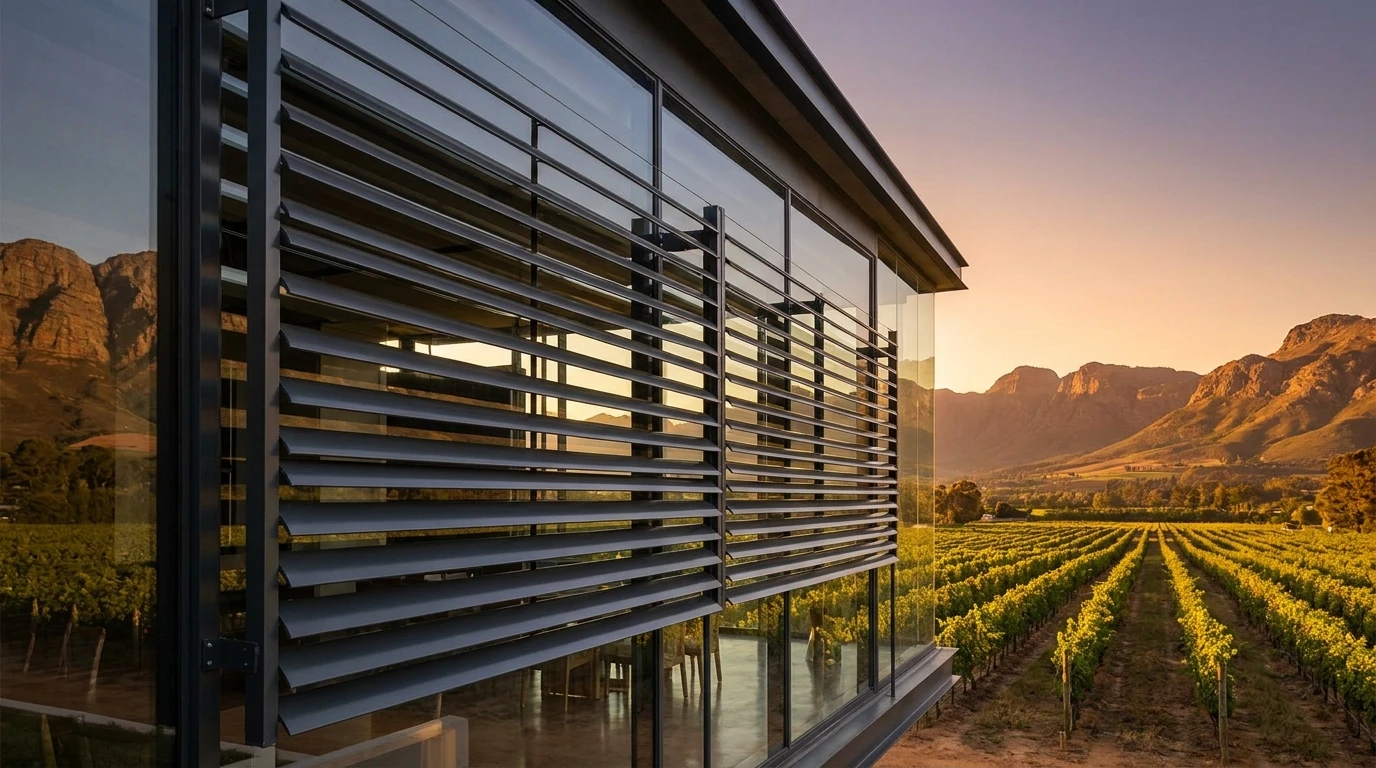
An indoor blind manages heat that's already inside the room; a blind mounted outside the glass stops most of it before it arrives. On a west-facing tasting room or double-volume living wall, the difference in indoor temperature is dramatic — it's how European and high-end South African architects have shaded glass buildings for decades, and it works exactly the same way in a Franschhoek valley summer.
This is deliberately not the product we lead with on a protected village gable — anything visible from Huguenot Road or Main Road on a building over 60 years old needs Heritage Western Cape sign-off under Section 34 before it needs a tape measure, and an inside-mount timber venetian usually answers that brief faster. External venetians earn their keep on the newer wine-estate additions and architect-designed builds where a facade change is genuinely part of the plan from the outset — a west-facing tasting room, a double-volume entertaining wall, or a new-build guest wing behind an older street frontage.
This is premium spend and a visible change to the facade — the opposite of the low-friction, inside-the-sash answer that suits most of the historic village core. On any estate or heritage-adjacent property, we'll flag upfront whether it's actually the right conversation to have, rather than push a facade product where an inside-mount blind would get approved faster and cost less.
The newer wine-estate wings around Franschhoek and further out toward Paarl's golf and wine estates are where this product does its best work; on the older farmstead stock in Groot Drakenstein and Simondium, or the heritage core of Stellenbosch, we'll usually talk you through an inside-mount option first.
Ready when you are
Send the form and one of our expert consultants will contact you shortly to arrange your free in-home measure.
Request my call-back →